Supplier financial distress is no longer a tail risk. In 2026 it is a recurring line item, and most procurement teams are still finding out about it from the news. The honest answer to “how do companies detect supplier financial distress early?” is that most do not. They learn a key supplier is in trouble when a Chapter 11 filing lands, a plant goes quiet, or a CFO sees the press release. By then the options are expensive re-sourcing, production stoppages, and write-offs.
Early detection means continuously monitoring the financial signals that precede a failure (liquidity decline, debt load, payment behavior, margin compression) across every tier of your supply base, not just your direct suppliers. The teams that do this turn a fire drill into a managed transition.
The warning signs are already flashing
The automotive supply base is the clearest example. Marelli, a Tier 1 supplier to Stellantis and Nissan, filed for Chapter 11 carrying roughly $4.9 billion in funded debt, and listed those two automakers as its largest unsecured creditors, owed a combined $767 million. A supplier does not arrive at $4.9 billion in debt overnight. The distress built for years through tariff exposure, weak EV contracts, and declining orders. The signals were public the whole time.
Marelli is not an outlier. Industry analysts are warning that mounting pressure on suppliers could trigger a wave of bankruptcies in 2026, driven by falling orders, tariffs, and high debt loads concentrated in private-equity-owned suppliers. The pressure is heaviest where buyers can see it least: smaller Tier 2, Tier 3, and Tier 4 component makers facing cash-flow stress and insolvency.
Why the cost is higher than teams assume
Disruption is not an occasional event you can budget around. McKinsey found that supply chain disruptions cost the average company 45 percent of one year’s profits over the course of a decade, with disruptions lasting a month or longer occurring roughly every 3.7 years. A single prolonged shock to production can wipe out 30 to 50 percent of a year’s earnings.
Supplier financial distress costs the average enterprise nearly half of one year’s profits over a decade, yet most procurement teams only learn a supplier is failing after the headlines break.
The macro environment is making it worse. The 2026 Thomson Reuters Global Trade Report found that 72 percent of trade professionals now rank U.S. tariff volatility as the most impactful regulatory change they face, up from 41 percent a year earlier. Tariffs raise input costs fastest for the thinly capitalized sub-tier suppliers least able to absorb them.
What good looks like: tier-deep, dollar-denominated, continuous
The gap is not awareness, it is visibility and timing. While many executives report high confidence in their supplier oversight, only 56 percent of organizations can trace material origins to Tier 3 or Tier 4. Disruptions that start three tiers down stay invisible until they surface as a missing part.
Three things separate teams that get ahead of distress from teams that get surprised:
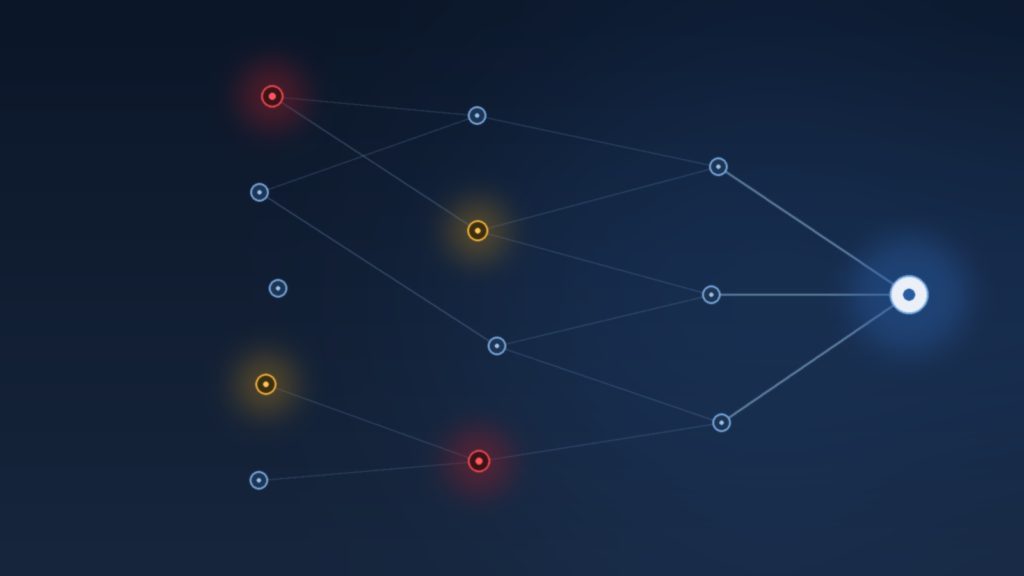
Visibility beyond Tier 1
Most failures originate deeper in the chain. Monitoring only direct suppliers leaves the majority of your exposure unobserved. Mapping and monitoring Tier 2 and Tier 3 suppliers is where early signals actually live.
Risk measured in dollars, not colors
A red, yellow, or green traffic-light score tells a CPO nothing actionable. The relevant question is how much working capital is at risk if a specific supplier fails. Quantifying exposure in dollars lets teams prioritize the suppliers that actually threaten the P&L.
Continuous monitoring, not quarterly snapshots
A risk report compiled last quarter is already stale. Financial distress accelerates in weeks. Live monitoring of financial signals, rather than periodic reviews, is what converts early warning into action time.
This is the gap Chain Verity was built to close. Founded by procurement practitioners, Chain Verity continuously tracks 200-plus financial signals per supplier across Tier 1, 2, and 3, and translates them into working capital at risk in real dollars rather than abstract scores. Procurement and risk teams can join the early-access design partner program now.
Frequently Asked Questions
Q: How do companies detect supplier financial distress early?
A: By continuously monitoring financial signals such as liquidity, debt levels, margins, and payment behavior across all supplier tiers, rather than relying on quarterly reviews or annual credit checks. Early-warning indicators like deteriorating cash flow or rising leverage typically appear months before a bankruptcy filing.
Q: Why is Tier 2 and Tier 3 supplier visibility so important?
A: Most disruptions originate below the direct supplier level, yet only about 56 percent of organizations can trace materials to Tier 3 or Tier 4. A financially distressed sub-tier supplier can halt production even when every Tier 1 relationship looks healthy.
Q: How much do supply chain disruptions actually cost?
A: McKinsey estimates that disruptions cost the average company 45 percent of one year’s profits over a decade, and a single prolonged production shock can erase 30 to 50 percent of a year’s earnings. Disruptions lasting a month or longer now happen roughly every 3.7 years.
Q: What makes financial-distress monitoring different from a credit score?
A: A credit score is a periodic, backward-looking snapshot. Continuous financial-distress monitoring tracks live signals and expresses the result as dollar exposure for your specific contracts, so procurement teams can prioritize action by the size of the risk rather than a generic rating.
