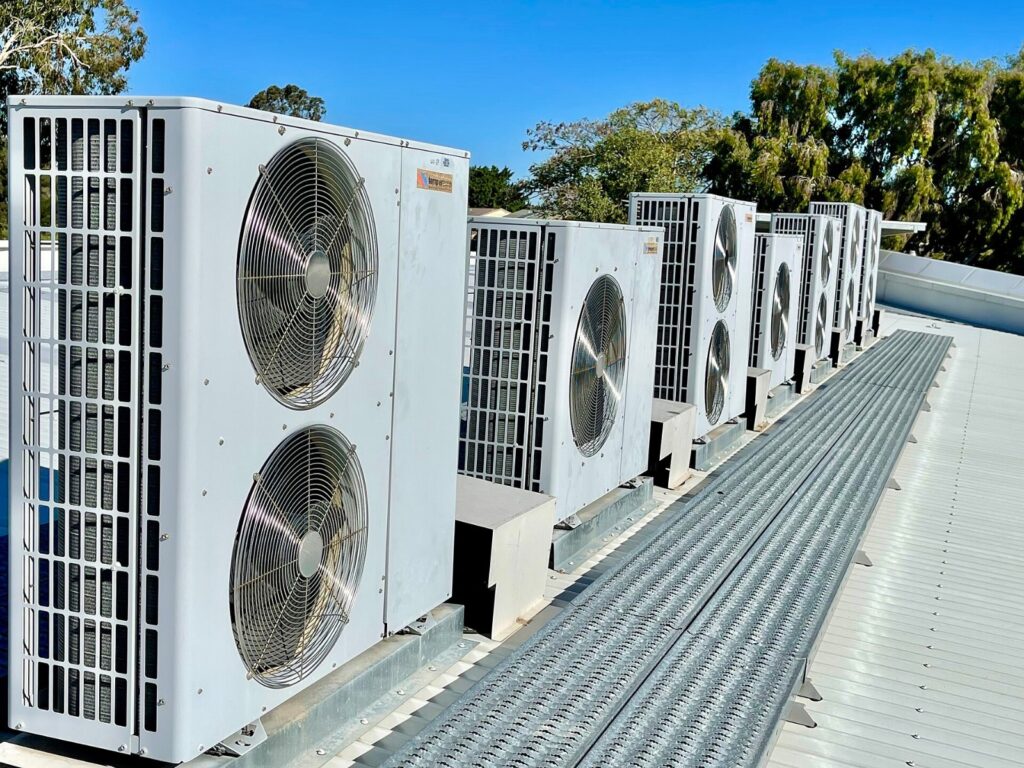
State refrigerant regulations have become the compliance variable HVAC procurement teams are least prepared for. In May 2026, the EPA finalized its Technology Transitions Reconsideration Rule, extending several deadlines and removing the installation cutoff for legacy residential and light commercial systems manufactured before January 1, 2025. In several states, that relief doesn’t apply.
The short answer: federal relief and state law now point in different directions. New York still explicitly bans installation of R-410A equipment, and California, New York and Washington maintain their own HFC regulations. Meanwhile, the AIM Act allowance phasedown that constrains refrigerant supply was not changed at all. HVAC compliance risk is now set by geography and product mix, not one federal calendar.
Why AIM Act compliance split into a federal and a state problem
The rule lengthened timelines without changing end-state GWP limits. Per Holland & Knight’s analysis of the final rule, supermarket refrigeration and remote condensing units now have until January 1, 2032 to hit 150 or 300 GWP limits, and cold storage warehouses moved to 2032 as well. EPA projects roughly $976 million in avoided engineering costs.
The HFC allocation program did not change, and EPA still treats the phasedown as an enforcement priority. For 2026, EPA capped total consumption allowances at 181,522,990 MTEVe, and under the AIM Act phasedown schedule the cap drops from 60% of baseline to 30% in 2029.
The AIM Act does not preempt state rules. ACCA and HARDI told Contracting Business that a state-by-state patchwork was the bigger long-term threat.
HFC phasedown supplier risk sits in the sub-tiers
Regulatory exposure does not stop at the OEM. Compressor, coil and heat exchanger suppliers carry inventory and tooling tied to specific refrigerants. During the 2025 shift to A2L refrigerants, R-454B demand outran supply. HARDI’s Alex Ayers described a price spike of nearly 400% before prices settled to about 6% above the prior year, per the same Contracting Business report. A tier-2 supplier caught in that swing never appears on a tier-1 compliance checklist until it misses a shipment.
HVAC supplier compliance risk shows up in pricing and inventory first
The ACHR News September 2026 price increase list shows Jones Stephens raising prices 5% to 15% by product group, OmegaFlex up 6% on TracPipe, and M&M Manufacturing and Snappy up to 6% effective September 21.
The state patchwork adds a second layer. Multi-state suppliers now carry parallel SKU sets, and inventory built on the assumption of federal relief can be stranded in a state that never granted it.
A supplier can be fully compliant in Texas and unsellable in New York on the same day.
Stranded inventory ties up supplier cash and stretches payables, a working capital problem that usually surfaces only after delivery dates slip.
What good looks like: from compliance tracking to contract action
Chain Verity treats regulatory divergence as a financial signal. The platform tracks 200+ real-time financial signals per supplier across tier 1, 2 and 3, and translates exposure into working capital at risk in dollars rather than a traffic-light score. Then it recommends what to do.
Avoiding disruption before it hits. Chain Verity flags suppliers whose revenue still concentrates in legacy R-410A product lines or in states with stricter rules, alongside distress signals like lengthening payables or inventory build. When thresholds are crossed, it recommends diversification timelines, such as qualifying a second A2L-ready compressor or coil source well ahead of the 2029 allowance step-down, and early engagement with suppliers carrying stranded inventory before they ration shipments.
Restructuring contracts based on where risk is concentrating. For suppliers showing exposure, Chain Verity points to specific clauses to revisit before renewal:
- Compliance warranties and audit rights: state-by-state compliance representations, plus documented refrigerant type and manufacture date.
- Minimum volume commitments: carve out legacy R-410A SKUs that may be uninstallable in key markets.
- Pricing indexation: tie refrigerant surcharges to a published index with caps and floors.
- Exclusivity: allow a second A2L source if the incumbent cannot qualify capacity on time.
- Termination and step-in triggers: tie rights to loss of allowance access, a failed state audit, or sustained financial deterioration.
To test this on your own supplier base, apply to become a design partner.
Frequently Asked Questions
Q: How do state refrigerant regulations affect HVAC supplier risk?
A: The same product can be legal to install in one state and banned in another. New York, for example, still bans R-410A installations despite federal relief. Suppliers weighted toward legacy refrigerants face stranded stock and cash strain that flows up to OEMs.
Q: Did the EPA’s 2026 Technology Transitions rule change the HFC phasedown?
A: No. The May 2026 rule extended some installation deadlines but left the HFC allocation program untouched. Allowances keep tightening, with the cap falling to 30% of baseline in 2029.
Q: Which HVAC supplier contract clauses should be revisited after the AIM Act changes?
A: Compliance warranties and audit rights, legacy-SKU volume commitments, refrigerant pricing indexation, exclusivity terms, and termination or step-in triggers. Prioritize suppliers where live data shows exposure concentrating.
Q: How can procurement teams monitor HFC phasedown supplier risk continuously?
A: Combine regulatory mapping by state and product line with real-time financial signals at tier 1, 2 and 3. Quarterly reviews miss the payables shifts that precede distress. Chain Verity monitors these signals live and recommends sourcing and contract actions when thresholds are crossed.
